


Welcome to this edition of The Impact Post!
Youth sits near the top of India’s CSR agenda, and the funding shows it. As more money goes towards young people, two things matter more: what we notice about them before we design for them, and what we measure once a programme ends. This edition is built around one question. Are we counting what is easy to count, or what actually shapes a young person’s life?
The Screen Trap looks at a concern that has moved from the household into the Economic Survey: problematic digital use among young Indians, now visible in rural and semi-urban homes as well. The piece does not call for restriction. It points to the missing links between families, schools, mental-health services and offline spaces, and argues that CSR is well placed to strengthen them.
Rooted in Reality widens the lens. It draws on India’s experience of localising the SDGs and on how gender runs through caste, class and the household. From there, it asks what an evaluator should examine before a “proven” model is taken to a new place.
This month’s Status Quo Audit brings the question closer to home. What Are We Really Counting When We Count Youth? looks past record CSR spending on skilling and livelihoods at a familiar habit: measuring certificates while giving less attention to what a young person wants or is already good at. It also asks why sport, the area hardest to measure, remains the least funded.
In NuSocia Pulse, Abdul Azim looks back on his time with Khelo MP in Madhya Pradesh government schools. There, physical training instructors built handball, archery, rope skipping and hockey programmes with very little equipment. His story grounds an idea that runs through this edition. Often the ability is already there, and the work is to build a system that can see it and give it room.
Happy Reading!
NuSocia Co-Hosts a Funder-Readiness Workshop at Charcha 2026!
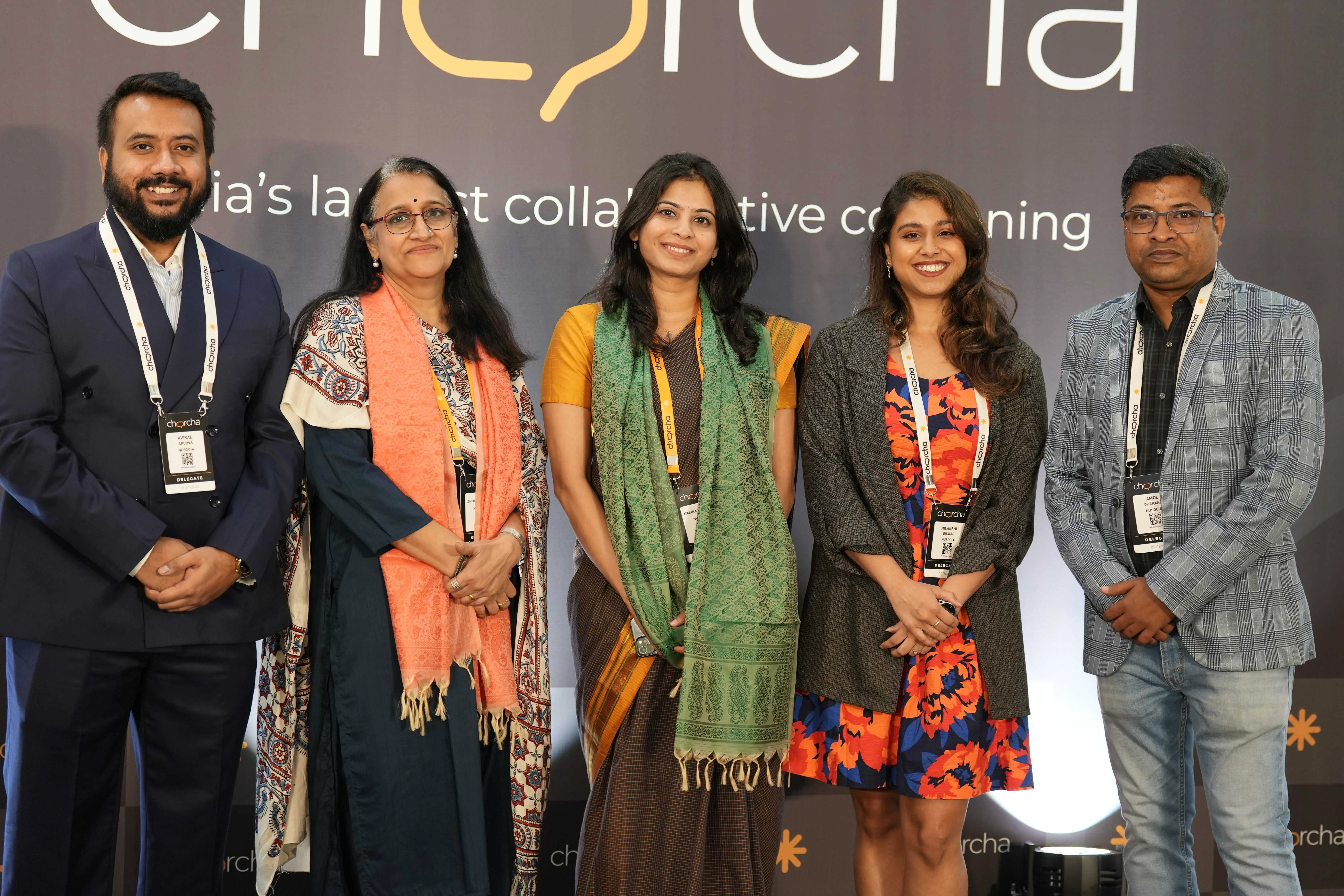
Charcha, the collaborative convening run by the*spark forum, held its seventh edition on 15–16 September 2026 at the India Habitat Centre, New Delhi. This year’s theme was how samaaj, sarkaar and bazaar can align on shared problems and on pathways to inclusive, resilient economic growth. NuSocia co-hosted a workshop in which participants worked through a Funder-Readiness Diagnostic Tool developed in-house. The self-assessment is built around what CSR and foundation funders look for during and after due diligence. It covers four scored areas: financial and legal due diligence, governance, impact measurement and communication, and data systems. Alongside these sit a worksheet for testing fit with one specific funder and a separate, aspirational “Future Proofing” section on AI maturity, climate resilience, DEI and sustainability. Participants got a first look at this tool, along with case studies, and many participants left buzzing with answers!
If you want to see this tool as well, click below! Reach out to research@nusocia.com for more information.
The Screen Trap
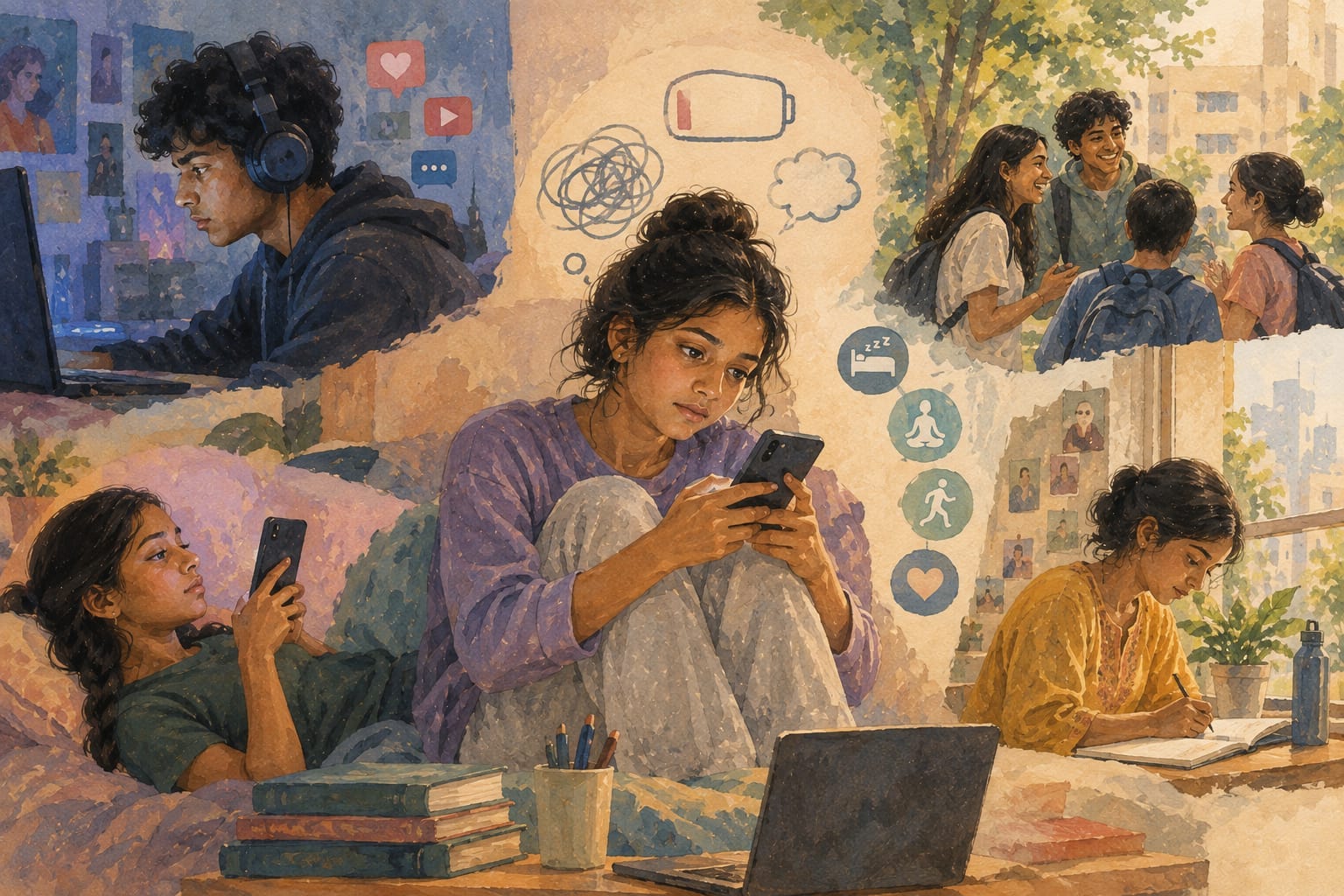
In early 2026, the Economic Survey called excessive and compulsive digital use among young people an economic, social and mental-health concern. Soon after, Karnataka released a draft policy on responsible digital use among students. Access is no longer the main constraint for young Indians. What matters now is how they use technology and what it displaces. This piece brings together new Indian evidence linking problematic use with poor sleep, stress, anxiety and weaker concentration. It also notes that the risk now reaches well beyond affluent cities. ASER 2024 found that more rural adolescents had used a smartphone for social media than for education. For CSR leaders, the piece does not recommend parallel helplines or one-off detox campaigns. It shows where funding can strengthen what already exists: family and school capability, referrals to public mental-health services, offline alternatives, and evidence on whether young people actually sleep and feel better.
Rooted in Reality
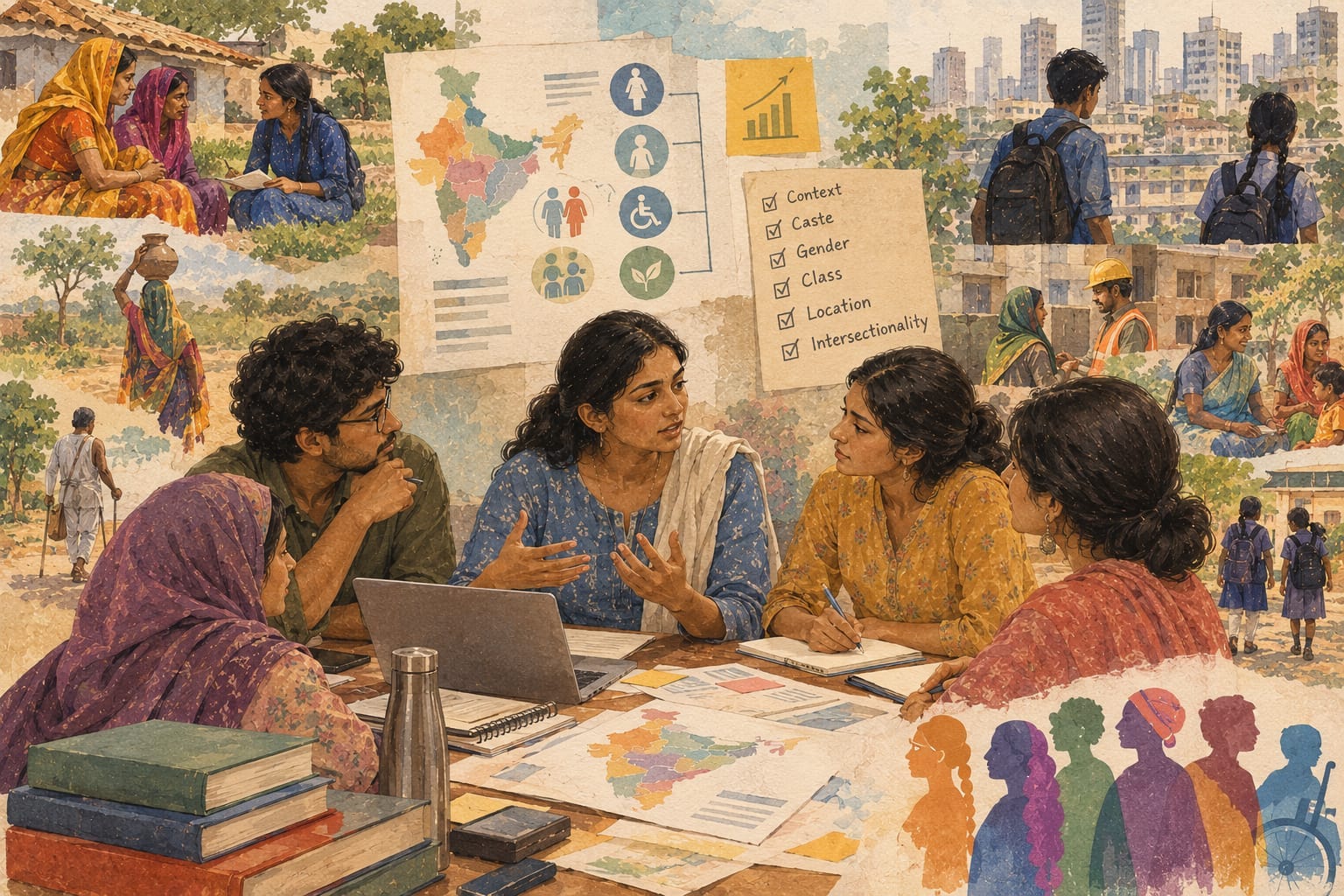
Evaluators work with global frameworks, indices and benchmarks every day. This piece asks what happens when those tools are applied without major adjustments. Taking India as its case, it looks at how the country turned the SDGs into its own National Indicator Framework. It also explains why categories built around race or income cannot capture inequality structured by caste. The gap is widest on gender. A Dalit woman agricultural labourer, a Muslim woman home-based worker and an upper-caste woman in salaried work may all be counted as “women beneficiaries”, yet the barriers they face are very different. The article offers seven questions to ask before replicating a programme, from who holds power locally to who in the household is actually being reached. Our NuSocia’s Gender Centre of Excellence takes this same approach to build context into evaluation design. For anyone borrowing a proven model, it is a useful account of what “proven” can leave out.
The Status Quo Audit
What Are We Really Counting When We Count Youth?
On paper, youth-focused CSR is growing. India’s CSR spend reached a record ₹40,794 crore in FY 2024-25, and vocational skills and livelihoods have both risen steadily. The less comfortable part is what the sector tends to measure: youth trained, certified and, where possible, placed. These are real milestones. But the step before training, which is understanding what a young person wants and what they can already do, gets far less attention than the certificate. The piece traces the familiar results. The same local trades are repeated across projects. Physical aptitude built through years of walking, farm work and household labour is rarely recorded as potential. Sport stays the smallest category, perhaps because progress there is slow and hard to count. The article is not a case against skilling. It asks whether the constraint is still the scale of funding, or now the direction it takes.
NuSocia Pulse | Stories From the Ecosystem & Beyond
Stories from the Ground
Building a Sporting Culture in Government Schools
“The real impact of sports is not only measured by medals, but by the opportunities and confidence created for every child.”
— By Abdul Azim, [Role], NuSocia
In 2022, I joined the Khelo MP project, run by the Piramal Foundation with the Directorate of Public Instructions, Government of Madhya Pradesh. I went into the field assuming that sport in a government school was mainly about producing athletes. Months on the ground changed my mind.
I spent my days travelling between districts and sitting with PTIs, principals and district officials. The same problems came up everywhere. There was too little equipment. Playgrounds existed more convincingly on paper than on the ground. Participation, especially among girls, stayed low. My job was to listen, mentor field teams and PTIs, and document the practices worth repeating elsewhere.
Many of those practices came from individual teachers. In Ratlam, Mahendra Singh Solanki built a girls’ handball programme that grew to 40–45 regulars, and some of them now compete at the state level. The girls kept coming back because, often for the first time, they were part of a team. In Shajapur, Lokendra Singh Tomar started archery with no equipment and open resistance from families. Today around 70 students practise, and 13 have qualified for national competitions. In Jabalpur, Sarika Singh turned rope skipping into a serious discipline with almost no infrastructure. Rakesh Srivas stayed with a group of girls in hockey until they reached the state level.
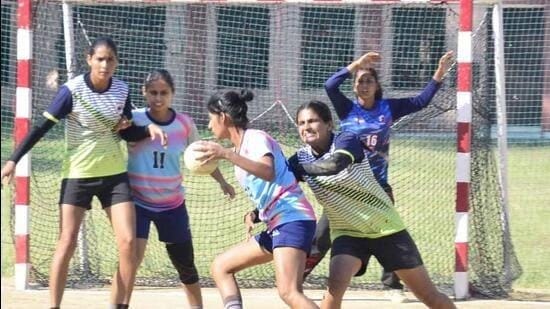
These teachers had one thing in common. They started with whoever showed up, and they kept going long enough for participation to become a habit.
But passionate teachers cannot stay effective on their own for long. They need a system behind them. In Madhya Pradesh, that system included sports calendars, grants and a Master Trainer cascade, in which trained PTIs went on to train others in their divisions. Many participants were subject teachers holding a hockey stick or a bow for the first time. Whether that extra load can be sustained at scale is still an open question, but the Master Trainer cascade was a program worth replicating. The confidence and camraderie among the teachers was also a valuable outcome that translated into passion in programs.
What stays with me is a change in how schools talked about themselves. “Let’s make the best use of what we have” replaced “we don’t have enough.”
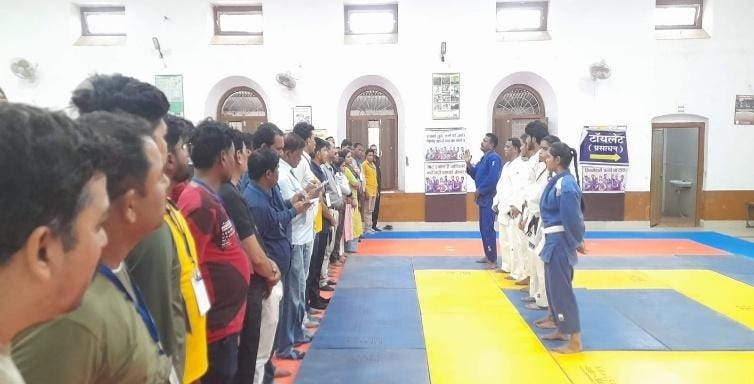
A Quick Snippet of FOI 2026
Take a peak at what happened on 7 August and hear from the participants of NuSocia X Voltas Facets of Impact 2026.