

Welcome to this edition of The Impact Post!
From shifting geopolitical alliances to the breakneck speed of artificial intelligence, the “impact” sector is being forced to outgrow its traditional boundaries.
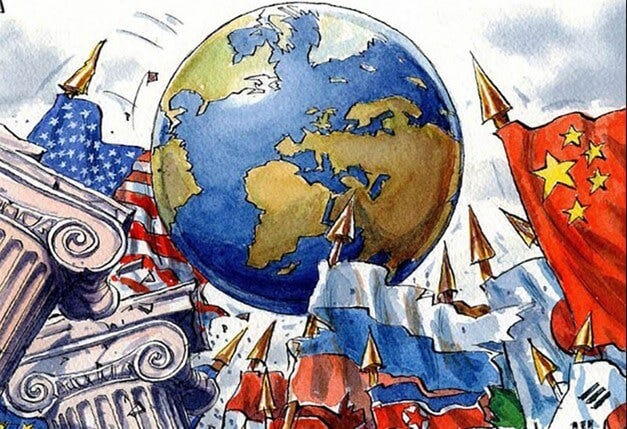
Our lead feature this month, “Embedding Geopolitical Risk into Sustainability Frameworks,” argues that environmental and social goals can no longer exist in a vacuum. In an era of conflict, a truly resilient sustainability strategy must account for the fragile political landscapes that hold our supply chains and communities together. We follow this with a look at the “Winners of the AI Race,” examining how technological sovereignty is becoming the new frontier of global inequality and development.
This edition also introduces the Status Quo Audit, a space dedicated to asking the uncomfortable questions that the development industry often sidesteps. We kick this off by looking at the “Multiplier Effect” in gender-responsive programs. We ask: Is a woman’s empowerment only considered a success if it serves as an economic anchor for others?
From the high-level risks of global trade to the intimate field stories of cancer care, this month is about looking closer at the structures we take for granted. We hope these pieces challenge you to think not just about what we do, but the underlying assumptions of why we do it.
Happy Reading!
Embedding Geopolitical Risk into Sustainability
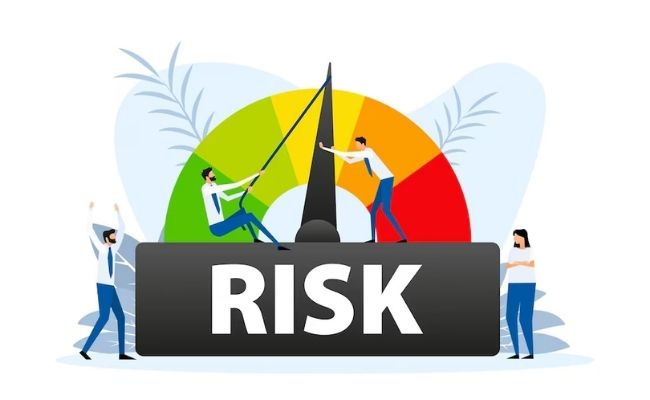
For years, ESG and sustainability have been treated as "internal" corporate metrics. But in an era of active conflict and shifting global alliances, the map is changing. The NuSocia Sustainability Center of Excellence explores why "being green" isn't enough anymore and how the most resilient organizations are now integrating hard-nosed geopolitical risk into their survival frameworks.
The Winners of the AI Race
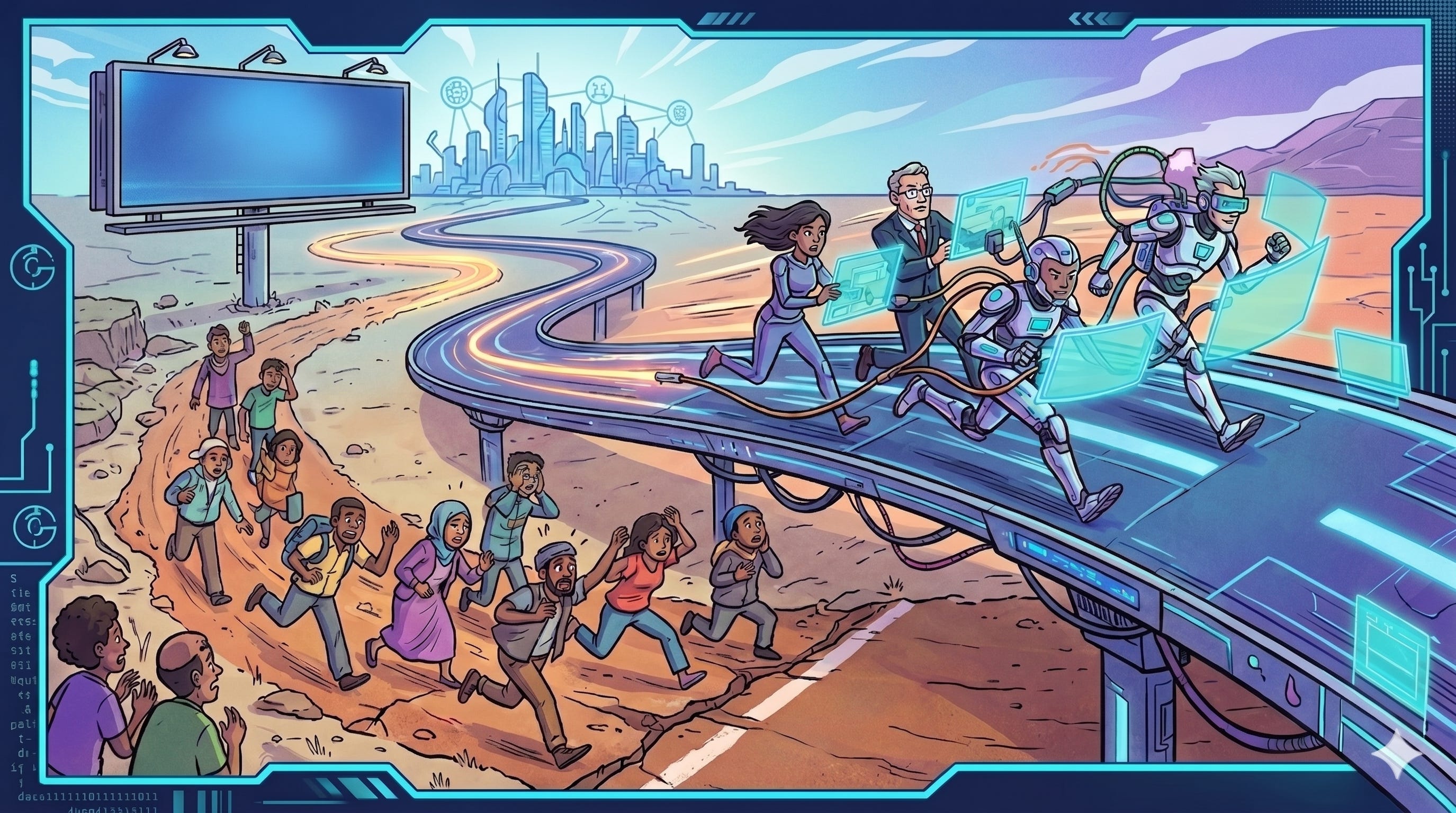
The finish line is moving, and the gap is widening. The AI revolution was promised as a great equalizer, but the reality looks like a new form of digital sovereignty. From processing power to data monopolies, we break down who is actually winning the AI race and, more importantly, what happens to the communities and nations left at the starting line. This article by the Data & AI Center of Excellence provides guidance on how you, too, could win the AI race.
The Status Quo Audit
The Multiplier Trap
Why can’t a woman’s success just be about her? In our first "Status Quo Audit," we tackle the uncomfortable framing of gender-responsive development. We often "sell" women’s empowerment to donors by promising they will save their families and communities, to show a multiplier effect on investment. But is this true empowerment, or just a more palatable form of utility? Our Gender Center of Excellence is asking the question: Does a woman have the right to be successful for her own sake? Every month, we bring you a new question to ponder on and engage with us on a wider platform on the critical questions in social development and impact today.
NuSocia Academy
In our latest NuSociology, we sat down with Sachin Suresh from Schneider Electric, Access to Energy, to unpack the nuances of deploying Distributed Renewable Energy (DRE), using solar energy as a powerful example. In Episode 1, Sachin shares how DRE models across countries are transforming livelihoods, improving income generation, strengthening access to education, and enabling better healthcare for underserved communities.
NuSocia Pulse | Stories From the Ecosystem & Beyond
Stories from the Ground
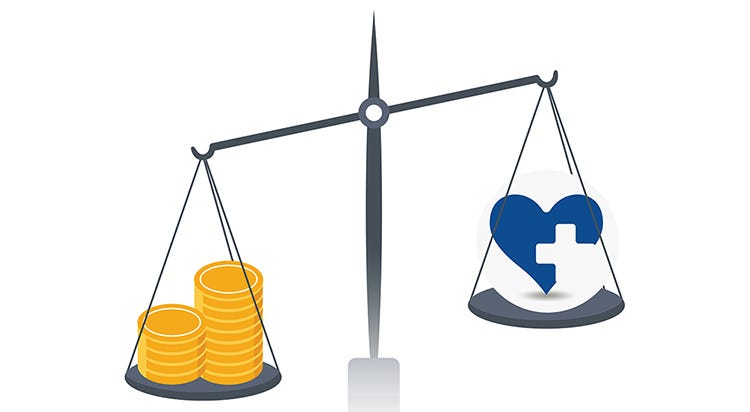
The Cost of Getting Sick
“Disease doesn’t just affect the patient; it impacts entire families.”
- Field reflections by Tanvi, NuSocia team & Public Health Center of Excellence Member
On March 10th, 2025, Amol, Faizan, and I presented the findings of three cancer care projects implemented across Maharashtra and Karnataka. The work had taken us into hospitals, into waiting rooms, into conversations that allowed me to see health funding in a new light.
◆
After conducting assessments on multiple cancer and health programs, a key learning has stuck with me: disease does not arrive alone. It brings with it a cascade that most health funding is not designed to address. The diagnosis is the beginning of an unravelling of savings, of routines, of the quiet assumptions a family makes about its future. When the primary earner is the one who is sick, income stops. When it is the mother who is sick, childcare stops. Debt begins. Assets are considered. Older children are pulled from school. A family that was managing, perhaps just barely, begins to slide and sometimes the slide that starts with a cancer diagnosis can last a generation.
This is what we saw in the field: not just sick people, but families mid-fall. And what we also saw in the projects we assessed, was what it looks like when something catches them.
The projects we assessed worked at different points of the same crisis. One equipped hospitals with diagnostic technology, so that cancers caught later, at the stage when treatment is most expensive and outcomes most uncertain, might instead be caught earlier. Another helped advanced-stage patients access private hospital care at subsidised rates, bypassing the months-long waiting lists at public facilities that a body in crisis simply cannot afford to keep waiting. A third wrapped children with cancer in a complete financial safety net: chemotherapy, nutrition, emergency funding, palliative care, everything, so that no family had to calculate which part of treatment they could skip.
What the project recognized is that the system alone will not hold these families. Public hospitals are overwhelmed. Government schemes, designed for scale, leave gaps at the edges: the patient too sick to qualify, the geography too remote to reach, the case too complex to fit a standard rate card. And into those gaps, people fall.
◆
This is where CSR has something to offer that is genuinely distinct. CSR is not bound by the logic of the majority. Because a life is not a statistic. And poverty is not just a present condition, it is a future of the family being weighed down in obligations, slowly, through the compound interest of untreated illness, abandoned schooling, and debt that never quite clears. When CSR funds a mother’s treatment to completion, it is not only funding her recovery. It is funding the trajectory of the children who will grow up with her still in the room.
Amol, Faizan, and I spoke to doctors, social workers, hospital administrators, and patients. What the stakeholders said, again and again, in different registers, was the same thing: continuity matters. Support during diagnosis is not enough. Support during treatment is not enough. What people need is someone willing to stay for the whole journey. The moment three months after discharge when a family is still fragile and the formal support has already moved on.
The projects we evaluated understood this, imperfectly but earnestly. And the outcomes showed it: patients completing treatment who would otherwise have stopped, families emerging without the debt that would have followed them for years, children whose mothers came home.
Ecosystem News
NITI Aayog "Viksit Bharat" Scenarios: NITI Aayog released 11 new reports in April 2026 detailing scenarios for India’s Net Zero transition. A key highlight for the development sector is the "From Borrowers to Builders" report, which tracks the evolution of women in India’s credit market.
Skill Development & Apprenticeships: The new report on Revitalizing India’s Apprenticeship Ecosystem (Feb/Mar 2026) suggests a shift in CSR strategy toward deeper integration between corporate training and public education to address the "skills gap."
AI in CSR: A new trend report from Goodera for 2026 notes that AI is moving CSR from "intuition-led" to "insight-led." Large corporations are increasingly using AI to predict "engagement drop-offs" in volunteering and to automate complex impact reporting for social programs. Here is a framework they have provided specifically for CSR’s looking to integrate AI.