

Welcome to this edition of The Impact Post!
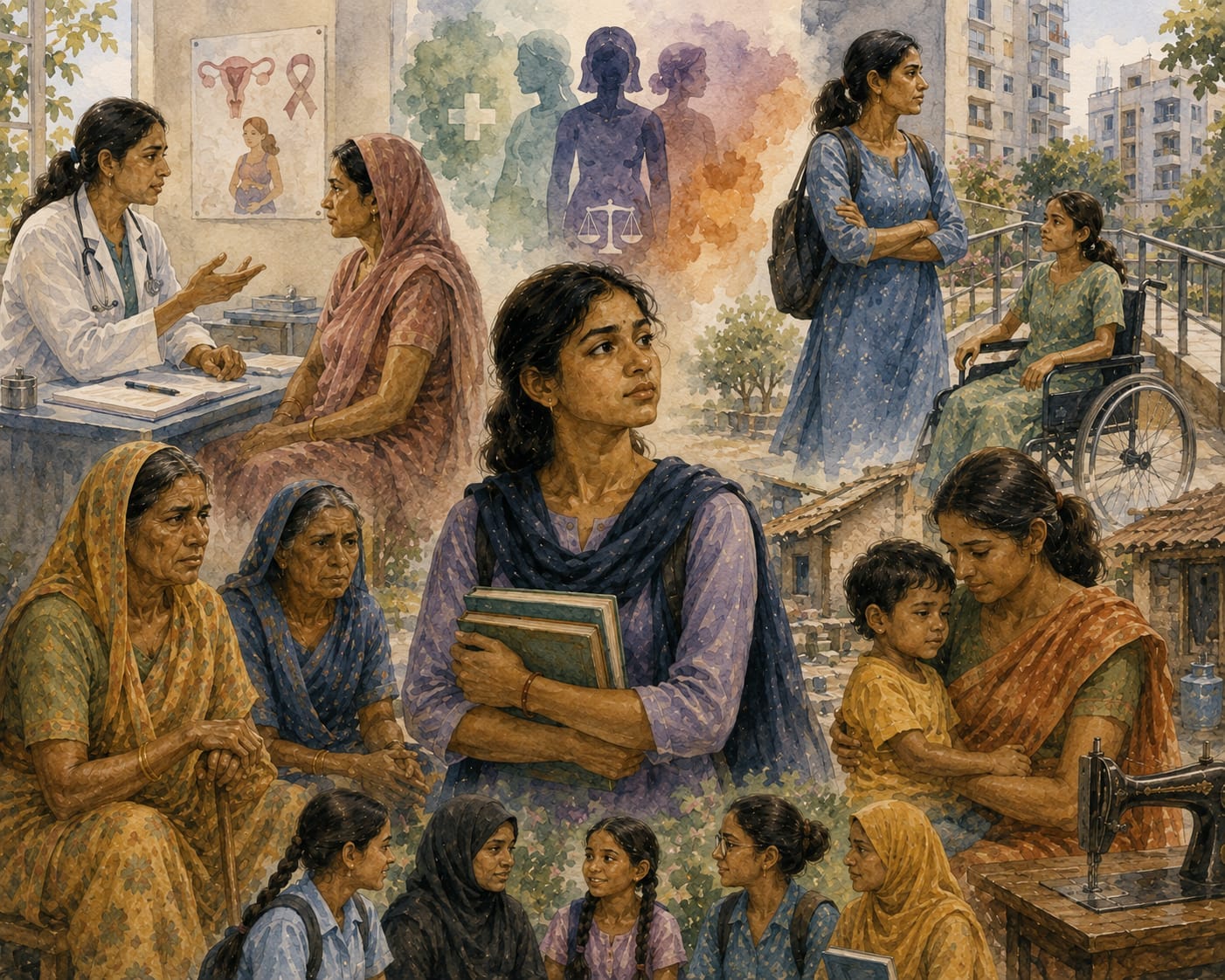
Two articles in this edition sit at very different scales, but they are asking a related question: what does it actually mean to design a health system for a woman or girl, rather than around her?
Consent and the Girl Child looks at India’s new nationwide HPV vaccination programme, a genuine public health milestone, and asks a narrower, more uncomfortable question: the policy asks a parent’s consent, but does anyone ask the girl? It traces what changes when “assent”, a child’s own informed agreement, is treated as worth building into a system, not left to chance.
Women’s Health Needs a Life-Course Investment Lens zooms out from a single decision to a lifetime of them, arguing that the sector’s habit of funding women’s health as a series of disconnected moments misses how adolescent anaemia, unscreened pregnancy complications, and underfunded midlife care are, in fact, the same story told at different ages.
Between them sits this edition’s Status Quo Audit, The Capacity Nobody Funds, which steps outside the clinical frame entirely to ask a structural question that both articles brush up against: funders increasingly want proof that programmes work exactly as claimed, but rarely fund the organisational capacity needed to produce that proof. Consent, continuity, and credibility, it turns out, are all things the sector says it wants and consistently under-resources.
Read together, these pieces are less about any single fix than about a shared instinct worth sitting with: that good intentions in social development tend to fail not at the level of policy, but at the level of the person, or the system, closest to the ground.
Happy Reading!
NuSocia Closes Its First In-Person Facets of Impact
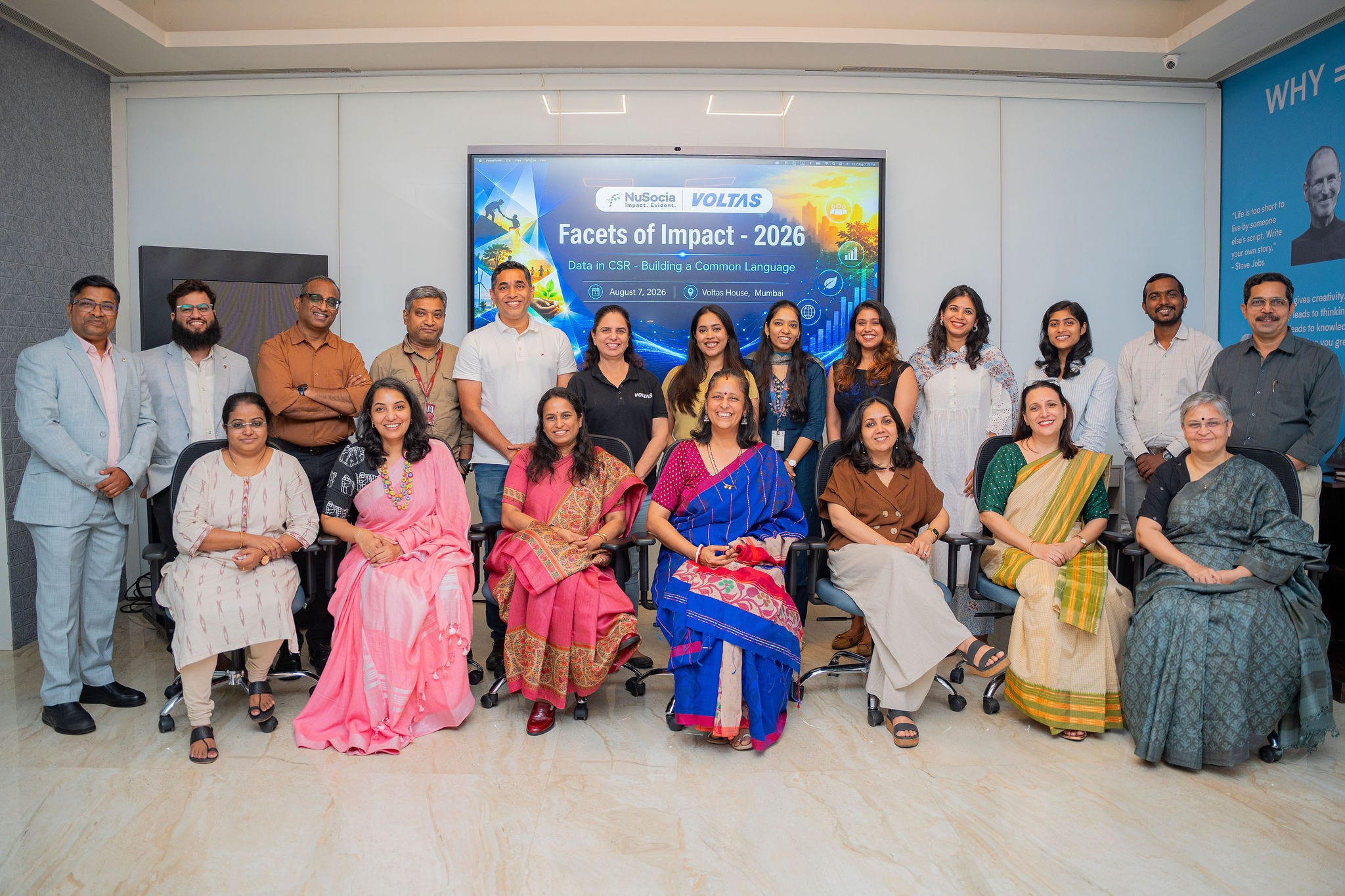
This impact post, we’re stepping outside our usual format to talk about something we co-hosted with our partners, Voltas: the first in-person edition of Facets of Impact! This is NuSocia’s ongoing series that brings the social sector together to work through the practical, often unglamorous problems standing between organisations and better data.
For FOI 2026, the conversation centred on the question: how do we build a common language around data, so that funders, implementers, and evaluators are finally talking about the same thing?
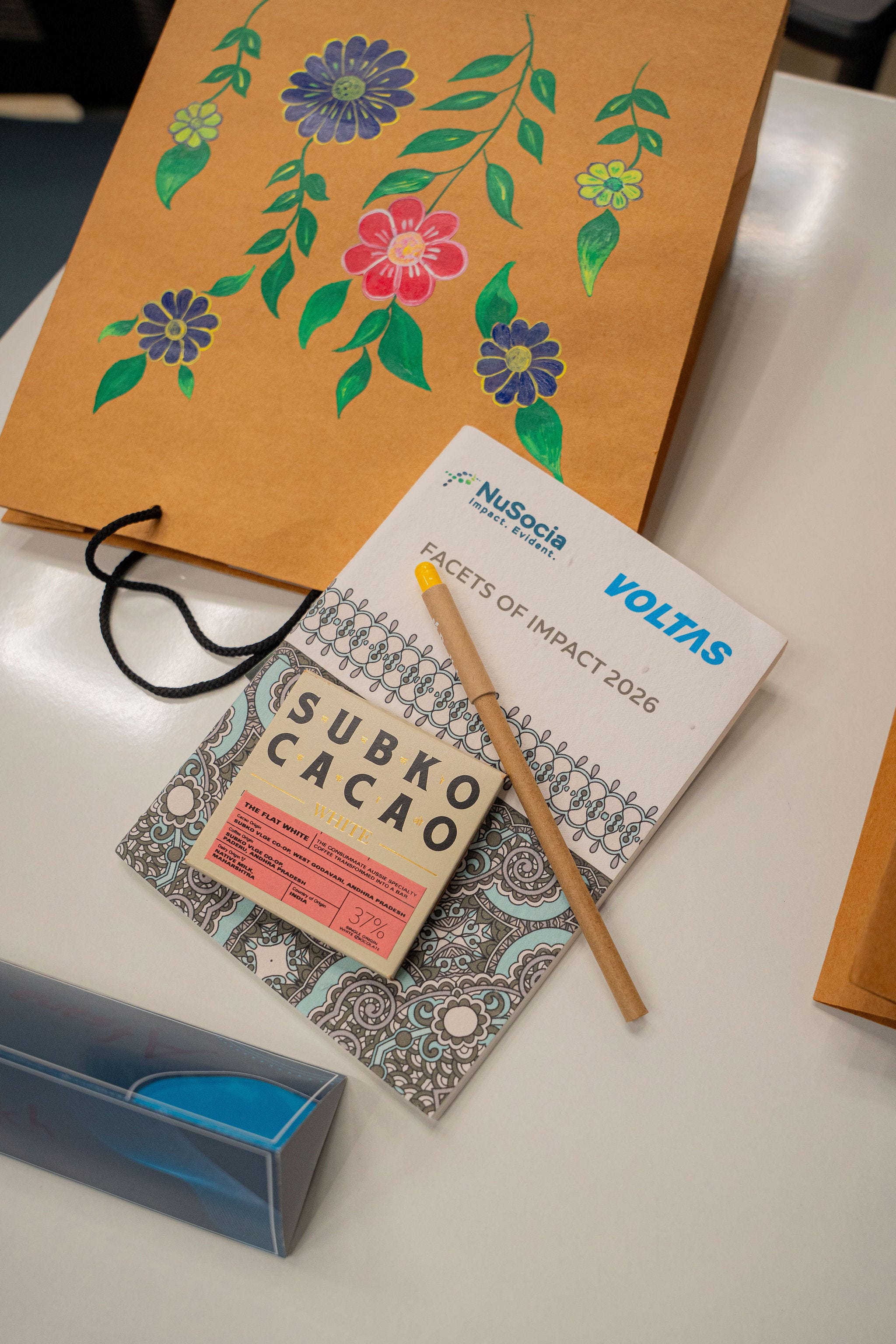
Rather than a day of panels, participants worked through their own data pain points live. We built a microsite where every participant could enter their organisation’s specific challenges, and watch them appear on screen alongside everyone else’s, turning individual frustrations into a shared, visible map of where the sector actually struggles with data. From there, groups worked through structured exercises to crowdsource solutions for each bucket of pain points that emerged, pooling what’s worked for different organisations to create next steps for what another is still stuck on.
Everyone left with more than notes: a tool of their own, built through the day, and a working roadmap for the specific data pain points they came in with. If you want access to the toolkit, reach out to research@nusocia.com.
Consent and the Girl Child
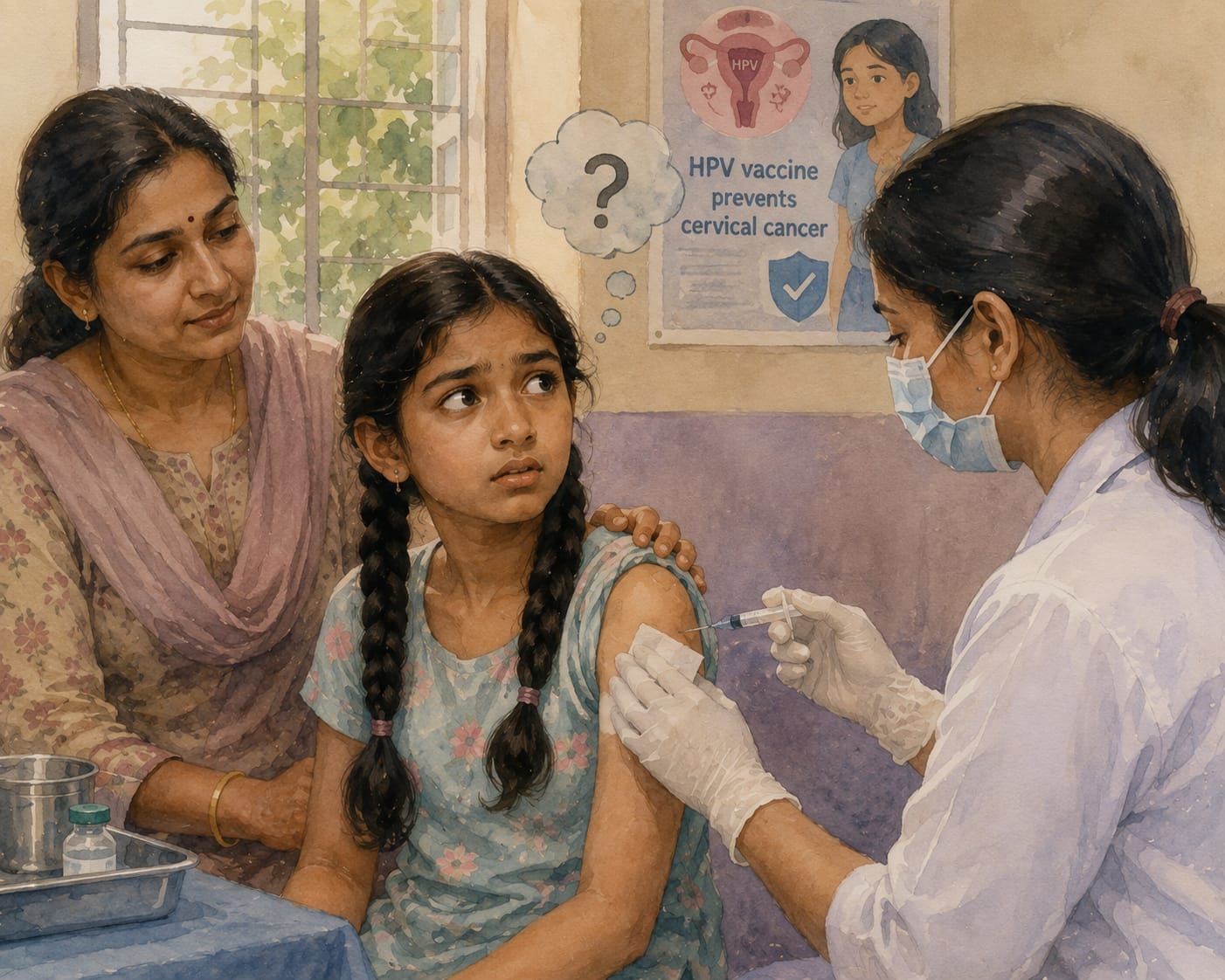
India's rollout of free HPV vaccination for 14-year-old girls is unambiguously good news, but a gap of assent appears when a child's own informed agreement is not looked for. Drawing on how England and Tanzania have handled similar questions, it offers ideas implementing organisations and policymakers could genuinely pilot.
Women's Health Needs a Life-Course Investment Lens
Why investing only in maternal and reproductive health misses the bigger system
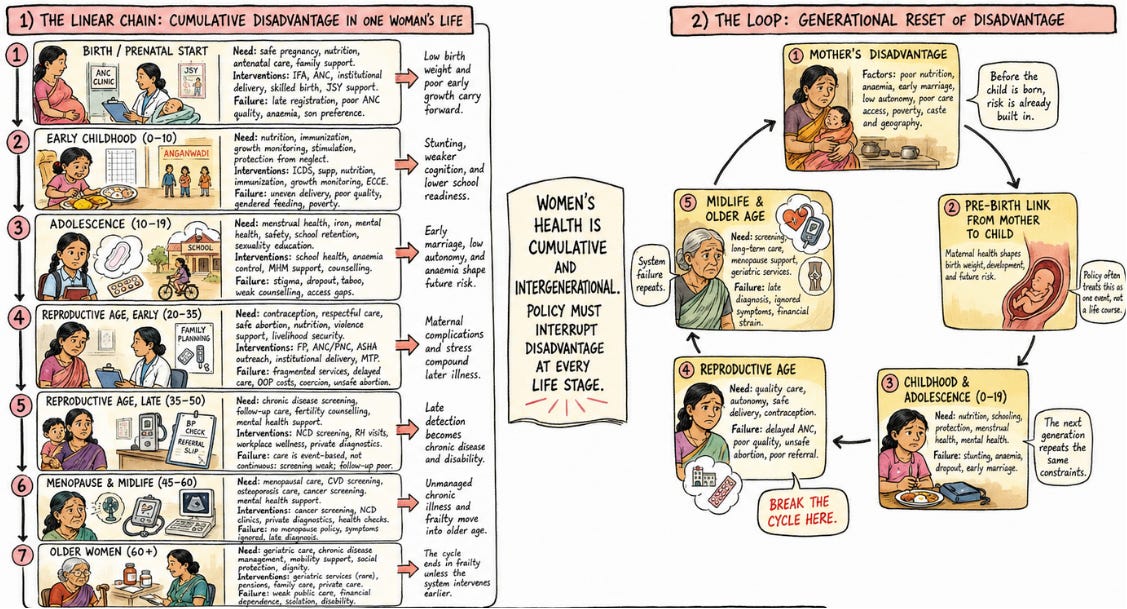
Women's health funding tends to cluster around discrete moments, treating each as its own clinical event. This piece argues that framing misses how health actually works: what happens to a girl at twelve shapes what happens to a woman at forty, and what happens during pregnancy often foreshadows a midlife disease risk. For anyone allocating capital toward women's health, it reframes the central question: not which issue to fund, but where in a woman's life course the investment actually interrupts a cycle of disadvantage.
The Status Quo Audit
The M&E Funding Gap: A Structural Mismatch, Not a Trust Problem
Funders increasingly want monitoring data that can survive outside scrutiny, an independent M&E wing. Grant budgets, meanwhile, rarely fund anything beyond a data collection officer bolted onto programme costs. This piece sits inside that catch-22: an organisation needs strong M&E to be considered fundable, and needs funding to build strong M&E, with smaller and mid-sized implementation partners most likely to get stuck on the wrong side of the loop. It resists the easy read that this is a story about funders not trusting NGOs. What it explores is a more useful question: what would it take to fund the capacity to produce trustworthy data, rather than just demanding the output.
NuSocia Pulse | Stories From the Ecosystem & Beyond
Stories from the Ground
Bias in Cancer Care
“…I realized the care continuum meant more than the actual provision of care. It also meant a societal support system that carried them through the continuum as well.”
- By Faizan, Head of Primary Research at NuSocia

I was visiting beneficiaries of a CSR-funded initiative that pays for cancer treatment and provides emergency funds to families where the odds of recovery are often slim, and where the cost of treatment can undo years of financial stability in a matter of months. I went in expecting to hear about the illness, the costs, and the difficulty of logistics, but I came away wondering about the simple awareness building and societal beliefs surrounding sickness.
The pattern showed up first in the smaller, quieter comments. Parents undergoing treatment told me, almost as an aside, that other families in the neighbourhood had stopped letting their kids play with theirs. Some children weren’t even allowed to speak to them anymore. A slow withdrawal, as if proximity itself carried risk. The parents didn’t dwell on it, they mentioned it the way you’d mention a change in the weather.
With adult patients, the discrimination took a more consequential shape. One woman I met had worked as a domestic helper before her diagnosis. She was cooking, cleaning, and looking after other people’s homes, the kind of work that depends entirely on trust and physical presence. After she was diagnosed, her employers told her she could no longer come to work. Not because she’d asked for time off, or because her treatment made her unable to perform the work, but simply because she had cancer. The decision was made for her, about her, without much explanation owed to her at all.
What struck me wasn’t only the unfairness of it, though that was obvious enough. It was the timing. This is precisely the point in a person’s life when income becomes crucial and treatment costs mount, travel to hospitals adds up, and households often have to choose between competing needs. Losing a job at this moment removes one of the few sources of stability a family has left to hold onto while everything else is uncertain. The illness creates financial pressure and the discrimination closes off one of the few ways to relieve it.
I don’t think the people making these decisions — the employers, the neighbours keeping their children at a distance — saw themselves as being cruel. Some of it seemed to come from fear, some from misplaced ideas about contagion. But intention doesn’t change what it does to the person on the receiving end. A cancer diagnosis already asks a great deal of a person — their body, their finances, their sense of control over their own life. What I hadn’t fully accounted for was how much of that burden gets added by the people around them, often without any medical necessity behind it at all.
I keep returning to something simple: the families I met were already carrying the hardest part of this — the treatment, the uncertainty, the cost. The isolation and the lost work were not part of the illness. When it comes to working in this space, I realized the care continuum meant more than the actual provision of care. It also meant a societal support system that carried them through the continuum as well.
Ecosystem News
NuSocia Co-hosting Charcha 2026
We're co-hosting a workshop at this year's charcha (Sep 15–16, India Habitat Centre, New Delhi) — a session designed to help organisations pause and take stock of their own funding readiness. Rather than another panel on where the money is, we're building a space for implementation partners to honestly assess how ready they are for CSR and foundation funding, and what specifically stands between them and unlocking it: the systems, the evidence, the internal capacity. If you're an implementing organisation thinking about your next stage of growth, we'd love to see you in the room.